
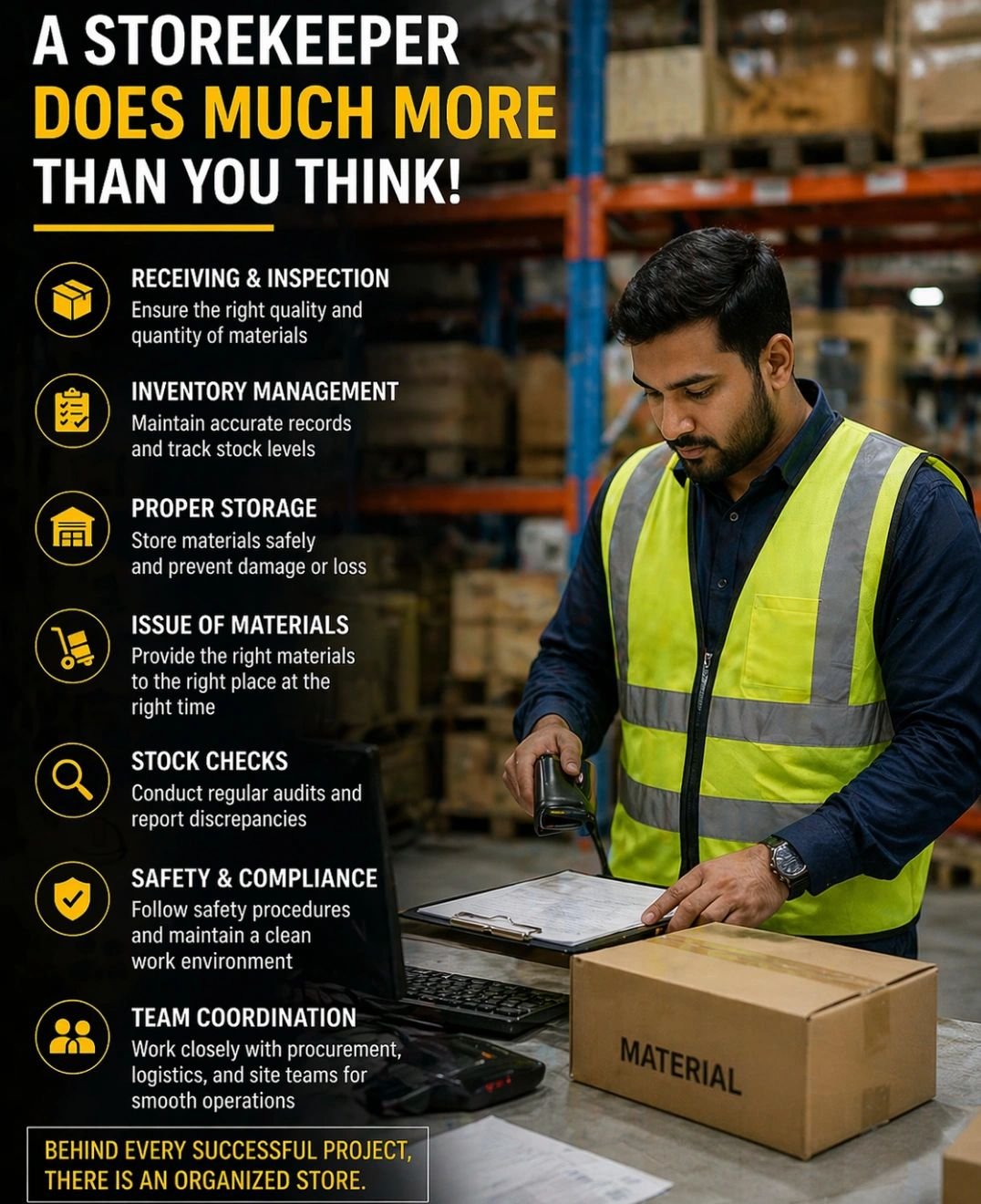
A Storekeeper Does Much More Than You Think
Most people assume a storekeeper simply “handles materials.” In reality, a single mistake in the store can stop an entire project cold.
Issue the wrong material, and work gets delayed. Misplace an item, and productivity takes the hit. Store something poorly, and it becomes a safety risk. A professional storekeeper isn’t just managing stock — he’s protecting time, cost, and safety on the project.
The 7 Core Responsibilities of a Storekeeper
1. Receiving & Inspection
Every delivery has to be checked against the order before it’s accepted — confirming the right quality and quantity of materials arrived, not just that a box showed up.
2. Inventory Management
Accurate, up-to-date records aren’t optional. Tracking stock levels precisely is what allows the rest of the project to trust that materials will actually be there when needed.
3. Proper Storage
Materials have to be stored correctly to prevent damage, loss, or deterioration — which also means storage itself becomes a safety consideration, not just an organizational one.
4. Issue of Materials
Getting the right materials to the right place at the right time keeps site teams moving. A delay or mix-up here ripples straight into the schedule.
5. Stock Checks
Regular audits catch discrepancies before they become bigger problems — missing items, mismatched counts, or unexplained shortages all get flagged early instead of surfacing during a crisis.
6. Safety & Compliance
Following safety procedures and maintaining a clean, organized work environment isn’t a side task — a cluttered or poorly managed store is a hazard in itself.
7. Team Coordination
None of this happens in isolation. A storekeeper works closely with procurement, logistics, and site teams to keep the entire material flow running smoothly.
What Happens Behind Every Successful Project
Behind every project that runs on schedule, there’s a store that’s quietly doing its job right:
- Proper inventory control
- Accurate documentation
- Strong coordination with site teams
- A real commitment to safety and organization
Quick Reference Table
| Responsibility | Why It Matters |
|---|---|
| Receiving & Inspection | Confirms correct quality and quantity before acceptance |
| Inventory Management | Keeps stock levels accurate and trustworthy |
| Proper Storage | Prevents damage, loss, and safety hazards |
| Issue of Materials | Keeps site work moving without delay |
| Stock Checks | Catches discrepancies before they escalate |
| Safety & Compliance | Reduces hazards from poor organization |
| Team Coordination | Keeps procurement, logistics, and site aligned |
Key Takeaway
Behind every successful project, there is an organized store. Respect the role — it’s bigger than it looks.
Frequently Asked Questions
Q: What are the main responsibilities of a storekeeper? A: A storekeeper is responsible for receiving and inspecting materials, managing inventory records, ensuring proper storage, issuing materials to the right place at the right time, conducting stock checks, maintaining safety and compliance, and coordinating with procurement and site teams.
Q: Why is proper storage important beyond just organization? A: Poor storage doesn’t just risk damage or loss of materials — it can also create direct safety hazards on site, such as blocked walkways or unstable stacking.
Q: How does a storekeeper’s role affect project timelines? A: Because materials need to reach the right place at the right time, any error in issuing, tracking, or storing them can directly delay work and reduce overall productivity on the project.
A well-run store isn’t a background function — it’s one of the things quietly holding a project’s schedule, cost, and safety together.